Introduction
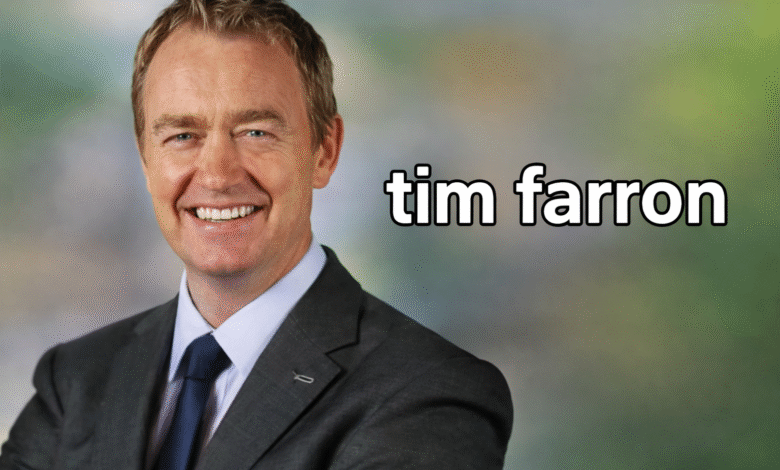
Tim Farron is one of the most recognisable liberal politicians of his generation in the United Kingdom. Known for his energetic campaigning style, strong convictions, and outspoken leadership, he has played a central role in shaping modern Liberal Democrat politics during a period of national upheaval.
At the same time, Tim Farron’s career has not been without controversy. His leadership years were marked by electoral challenges, intense public scrutiny, and difficult debates about values and identity. This balance of achievement and criticism has made his political journey both influential and instructive in contemporary British democracy.
Quick Bio
| Attribute | Details |
|---|---|
| Full Name | Timothy James Farron |
| Date of Birth | 27 May 1970 |
| Age | 55 |
| Birthplace | Preston, Lancashire, England |
| Nationality | British |
| Political Party | Liberal Democrats |
| Education | BA in Politics, Newcastle University |
| Religion | Christian |
| Spouse | Rosie Farron |
| Children | Four |
| Current Role | Member of Parliament |
Early Life and Background
Tim Farron was born in Preston, Lancashire, and spent his early years in the north of England. Growing up in a working- and middle-class environment helped shape his strong identification with local communities, public services, and social fairness, themes that would later dominate his political worldview.
From a young age, he demonstrated a keen interest in politics and public debate. His upbringing encouraged independence of thought, and this early exposure to civic life laid the foundation for a lifelong commitment to democratic participation and liberal values.
Education and Formative Years
Farron studied politics at Newcastle University, where his leadership abilities became clear. During his time as a student, he was elected President of Newcastle University Students’ Union, becoming the first Liberal Democrat to hold the position, a notable achievement that signalled his future political potential.
These formative years were crucial in sharpening his communication skills, ideological clarity, and confidence in public leadership. University politics exposed him to national debates and prepared him for the realities of competitive democratic systems.
Entry into Politics
Tim Farron joined the Liberal Party as a teenager, long before politics became his profession. His early involvement reflected a deep ideological commitment rather than personal ambition, as he spent years contesting elections without immediate success.
Before entering Parliament, he served in local government as a councillor. This grassroots experience grounded his politics in practical concerns such as education, transport, and local services, giving him credibility as a representative closely connected to community life.
Parliamentary Career
In 2005, Tim Farron was elected Member of Parliament for Westmorland and Lonsdale, overturning a seat that had been held by the Conservatives for nearly a century. This victory established him as a formidable campaigner with strong local support.
Since entering Parliament, he has consistently focused on rural affairs, environmental protection, and civil liberties. His parliamentary work reflects a commitment to representing under-served communities while maintaining a national liberal outlook.
Leadership of the Liberal Democrats
Tim Farron became Leader of the Liberal Democrats in 2015, inheriting a party recovering from significant electoral losses. His leadership aimed to rebuild trust, restore visibility, and reposition the party as a clear alternative in British politics.
However, this period was challenging. While Farron strengthened the party’s membership base and sharpened its opposition voice, the 2017 general election results fell short of expectations, leading to his resignation and widespread debate about leadership strategy.
Faith and Public Debate
One of the most distinctive aspects of Tim Farron’s public life has been his openness about his Christian faith. He has consistently argued that faith can coexist with liberal political values, advocating tolerance and inclusion while maintaining personal beliefs.
This openness also attracted criticism and intense media scrutiny. Supporters viewed his honesty as principled and refreshing, while critics questioned the compatibility of religious belief with modern liberal leadership, making this a defining and controversial element of his career.
Policy Focus and Political Values
Farron is strongly associated with liberal democracy, civil liberties, environmental protection, and opposition to authoritarianism. He was a prominent voice against Brexit, arguing that it threatened economic stability and international cooperation.
At the same time, his political positions have sometimes divided opinion. While admired for moral clarity and passion, he has also been criticised for strategic misjudgements and messaging challenges during periods of national uncertainty.
Later Career and Ongoing Influence
After stepping down as party leader, Tim Farron continued to serve as a senior Liberal Democrat MP and spokesperson. His work has increasingly focused on rural policy, agriculture, climate responsibility, and social justice.
Remaining active in parliamentary debates, he has reinforced his reputation as a committed and hardworking representative. His post-leadership years demonstrate resilience and a willingness to contribute without holding top office.
Personal Life
Tim Farron is married to Rosie Farron, and together they have four children. Family life remains central to his identity, and he often speaks about balancing public responsibility with private commitments.
Outside politics, he is known for his enthusiasm for outdoor activities, particularly walking and running in the Lake District. These interests reflect his strong connection to the rural landscapes he represents.
Legacy and Public Perception
Tim Farron’s legacy is defined by persistence, conviction, and authenticity. He is widely respected for rebuilding his party during difficult times and for maintaining integrity in the face of intense public scrutiny.
Yet his career also illustrates the challenges of leadership in a polarized political climate. His story is one of both achievement and limitation, making him a significant figure in understanding modern British liberal politics.
Conclusion
Tim Farron’s political journey highlights the complexities of leadership, belief, and representation in contemporary Britain. His career combines principled advocacy with hard lessons about political reality.
As a long-serving MP and former party leader, he remains an influential voice whose impact extends beyond electoral outcomes, offering insight into the evolving nature of liberal democracy in the UK.
Frequently Asked Questions
Who is Tim Farron?
Tim Farron is a British politician and long-serving Member of Parliament representing the Liberal Democrats.
When did Tim Farron become an MP?
He was first elected to Parliament in 2005.
Was Tim Farron a party leader?
Yes, he served as Leader of the Liberal Democrats from 2015 to 2017.
What is Tim Farron known for?
He is known for liberal political values, rural advocacy, and open discussion of faith in public life.
Is Tim Farron still active in politics?
Yes, he continues to serve as an MP and remains active in parliamentary and policy debates.