Introduction
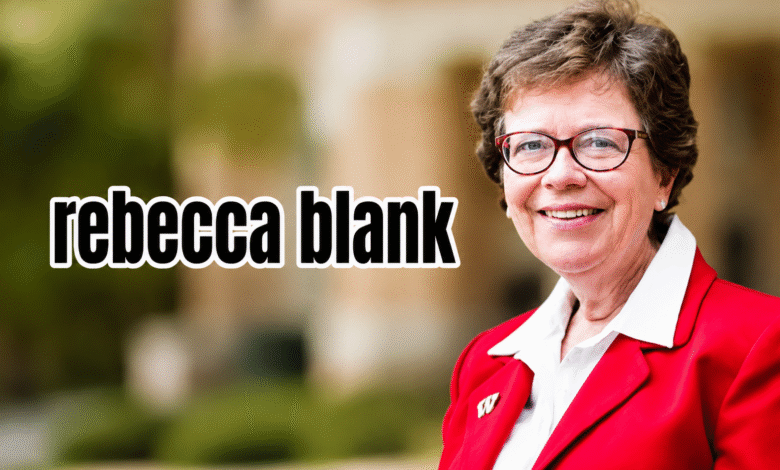
Rebecca Blank was one of the most influential economists and leaders of her generation. Her work reshaped how poverty and inequality are understood and addressed in public policy. Known for her sharp intellect, methodical research, and compassionate leadership, Rebecca Blank dedicated her life to improving society through evidence‑based policy and thoughtful public service. Her journey from academic economist to high‑ranking government official and respected university chancellor reflects a career marked by commitment, depth, and integrity.
Rebecca Blank’s contributions were not without challenge. At times she faced criticism for public policy decisions or institutional reforms that were difficult and controversial. Despite this, she remained steadfast in pursuing solutions grounded in rigorous analysis and fairness. Her legacy continues to influence economists, policymakers, educators, and students around the world.
Below is a comprehensive look at her life, career, achievements, and the lasting impact she made.
Quick Bio
| Attribute | Detail |
|---|---|
| Full Name | Rebecca Margaret Blank |
| Date of Birth | September 19, 1955 |
| Place of Birth | Columbia, Missouri, USA |
| Nationality | American |
| Education | University of Minnesota (BS), MIT (PhD) |
| Major Roles | Economist, Federal Official, University Chancellor |
| Spouse | Hanns Kuttner |
| Children | One Daughter |
| Known For | Poverty Research, Public Policy Leadership |
Early Life and Education: Formative Years of a Future Leader
Rebecca Blank’s early years were shaped by intellectual curiosity and mobility. Born in Columbia, Missouri, she grew up in a family that valued education and public service. Her father’s work took the family to different states, giving young Rebecca exposure to varied communities and perspectives. These early experiences helped shape her interest in society, economics, and the role of government in improving people’s lives.
Rebecca excelled academically. She graduated summa cum laude with a bachelor’s degree in economics from the University of Minnesota, where she developed a keen interest in social policy. Her pursuit of excellence continued at the Massachusetts Institute of Technology (MIT), where she earned her Ph.D. in Economics. Her work there laid the foundation for a career dedicated to understanding complex economic challenges, especially those affecting vulnerable populations.
Academic Career: Building a Foundation in Research and Teaching
Rebecca Blank’s academic career was distinguished and impactful. She began as a faculty member at Princeton University, where she taught and conducted foundational research on labor markets and poverty. Her analytical skill and ability to explain complex economic concepts made her a respected figure among students and peers.
She later joined Northwestern University, where her work expanded in scope and depth. There she focused on joint research in poverty, labor economics, and public policy. Her leadership in interdisciplinary research centers positioned her as a bridge between academic theory and real‑world policy application.
At the University of Michigan, Rebecca served as Dean of the Gerald R. Ford School of Public Policy. In this role, she helped prepare future leaders in public service and expanded programs that connected rigorous research with policy challenges facing communities across the nation.
Government Service: Influencing National Economic Policy
Rebecca Blank took her deep expertise into public service, where she held significant roles in the United States government. During the Clinton administration, she served on the President’s Council of Economic Advisers, contributing to national discussions on labor markets, social support programs, and economic strategy.
Her federal leadership continued under President Barack Obama, where she served as Under Secretary of Commerce for Economic Affairs and later as Deputy Secretary of Commerce. In these roles, she helped oversee major national operations, including the United States Census Bureau, a monumental effort to count and represent the entire U.S. population. Her work was critical in ensuring that census activities were conducted professionally, accurately, and fairly.
Rebecca’s government service demonstrated her belief that sound data and thoughtful analysis should guide decisions that affect millions of lives. While some of her policy decisions were met with debate, her commitment to transparency and evidence never wavered.
Chancellor of the University of Wisconsin–Madison: Bold Leadership in Higher Education
Rebecca Blank’s appointment as Chancellor of the University of Wisconsin–Madison marked a new chapter in her career. She led one of the most respected public research universities in the United States, guiding it through times of change and challenge.
During her tenure, she championed initiatives to expand access to education, strengthen research programs, and build institutional resilience. She was known for fostering collaboration and encouraging innovation across disciplines. Her leadership style combined academic seriousness with pragmatic decision‑making, balancing the needs of students, faculty, and the broader community.
At the same time, she faced criticism from some quarters over budget decisions and institutional priorities. Yet critics and supporters alike acknowledged that she approached every issue with thoughtful analysis, a commitment to fairness, and a long‑term vision for the university’s success.
Pioneering Research: Redefining Poverty and Policy
Much of Rebecca Blank’s scholarly work focused on understanding poverty and inequality in America. She co‑authored influential books and articles that questioned conventional measurements of poverty and highlighted the complexities of economic life for low‑income families.
Her research contributed to the development of the Supplemental Poverty Measure, a more comprehensive way to assess economic well‑being that accounts for living costs, tax benefits, and non‑cash assistance. This work remains a cornerstone in economic policy discussions and reflects her belief that research must evolve to better reflect lived realities.
Her scholarship was both respected in academic circles and cited by policymakers seeking more accurate and fair tools to measure social progress. The positive impact of her work continues to be felt in economic research, policy debates, and academic curricula.
Legacy: A Life of Impact and Inspiration
Rebecca Blank’s legacy is powerful, positive, and enduring. She demonstrated that rigorous analysis and compassionate leadership can coexist. She believed in using knowledge to improve lives, whether through better public policy, expanded educational opportunities, or more thoughtful measurement of social issues.
Even after her passing in 2023, her influence remains strong. Students, scholars, policymakers, and educational leaders continue to draw from her work. Her career exemplifies how thoughtful scholarship and principled leadership can contribute to meaningful change.
While she faced challenges and criticism, her resilience and integrity made her a role model for future generations. Rebecca Blank proved that the pursuit of truth, combined with a deep concern for human welfare, can transform institutions and inspire others.
Conclusion
Rebecca Blank was a visionary economist and dynamic leader whose work transcended academia and government. She dedicated her life to advancing knowledge, improving public policy, and strengthening higher education. Her legacy continues to shape discussions on poverty, policy, and leadership. Though she is no longer with us, the ideas she championed and the lives she touched remain a testament to her enduring impact.
Frequently Asked Questions (FAQ)
Who was Rebecca Blank?
Rebecca Blank was an American economist, academic leader, federal official, and university chancellor known for her extensive research on poverty and her leadership roles in government and education.
What were Rebecca Blank’s major contributions?
Her major contributions include pioneering research on poverty measurement, leadership in the U.S. Department of Commerce, and guiding the University of Wisconsin–Madison as its chancellor.
What is the Supplemental Poverty Measure?
The Supplemental Poverty Measure is an expanded way of evaluating poverty that includes broader income and expense factors. Rebecca Blank’s research played a key role in its development.
Where did Rebecca Blank serve in government?
She served in the Council of Economic Advisers, as Under Secretary and Deputy Secretary of Commerce, and helped oversee the U.S. Census operations.
What is Rebecca Blank’s legacy?
Her legacy lies in advancing economic understanding, improving public policy, and providing courageous and thoughtful academic leadership.