Introduction
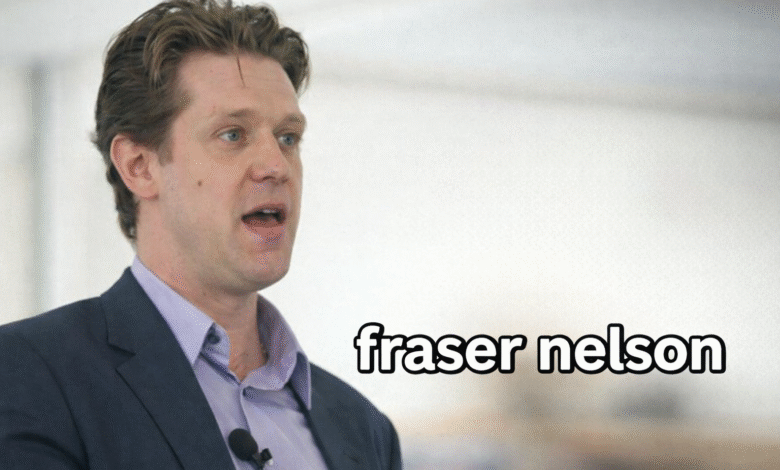
Fraser Nelson is one of the most recognisable names in British political journalism. Known for his sharp analysis, confident editorial leadership, and willingness to challenge political orthodoxies, he has played a defining role in shaping modern conservative-leaning commentary in the United Kingdom. At the same time, his work has attracted criticism, making him a figure of both influence and debate.
Over a career spanning more than two decades, Fraser Nelson has moved from reporting to editing one of Britain’s most famous political magazines, and later returning to newspaper column writing. His journey reflects the evolution of political media itself—shifting from print-first journalism to a blended digital and opinion-driven landscape.
Quick Bio
| Detail | Information |
|---|---|
| Full Name | Fraser Andrew Nelson |
| Date of Birth | 14 May 1973 |
| Age | 52 (as of 2026) |
| Birth Place | Truro, Cornwall, England |
| Nationality | British |
| Profession | Political journalist, editor, columnist |
| Education | University of Glasgow; City, University of London |
| Marital Status | Married |
| Children | Three |
| Known For | Editorship of The Spectator; political commentary |
Early Life and Background
Fraser Nelson was born in Truro, Cornwall, but his upbringing was shaped more by Scotland than England. He grew up in Nairn, in the Scottish Highlands, an experience that influenced both his worldview and his understanding of the United Kingdom as a union of distinct political and cultural identities.
His family background involved frequent movement, as his father served in the Royal Air Force. This early exposure to different regions and communities helped Nelson develop a broader perspective on national politics, governance, and public policy—an outlook that would later define his journalism.
Education and Academic Formation
Nelson attended Nairn Academy before later studying at Dollar Academy, a well-known Scottish boarding school. These formative years sharpened his interest in history, debate, and current affairs.
He went on to study History and Politics at the University of Glasgow. During his university years, he became editor of the Glasgow University Guardian, an early sign of his leadership and editorial instincts. After graduating, he completed a Diploma in Journalism at City, University of London, equipping him with professional reporting and media skills that launched his career.
Start of Career in Journalism
Fraser Nelson began his professional journalism career in the mid-1990s at The Times, where he worked as a business reporter. This role grounded him in economic reporting and policy analysis, areas that would later become central to his commentary.
He later moved into political reporting, serving as Scottish political correspondent. This period allowed him to develop deep expertise in devolved politics, public finance, and the interaction between Westminster and Scotland—an experience that strengthened his national profile.
Rise Through British Media
In 2001, Nelson became political editor of The Scotsman. This role marked a significant step forward, placing him at the centre of Scottish and UK political debate. His work combined reporting with strong analytical commentary, earning him recognition within political journalism circles.
He later worked on The Business, further broadening his experience in economic and policy-focused journalism. These roles collectively prepared him for senior editorial leadership at a national level.
The Spectator Years
Fraser Nelson joined The Spectator in 2006, initially as associate editor and political editor. In 2009, he was appointed editor, a position he would hold for fifteen years—one of the longest editorial tenures in the magazine’s modern history.
Under his leadership, The Spectator expanded its digital presence, developed podcasts and newsletters, and maintained strong print circulation at a time when many magazines struggled. Supporters credit him with modernising the publication while preserving its distinct voice.
However, his editorial approach also attracted criticism. Some readers and commentators argued that the magazine became more politically combative under his leadership. This mix of praise and criticism reinforced Nelson’s reputation as a powerful but polarising media figure.
Later Career and Column Writing
After stepping down as editor of The Spectator in 2024, Fraser Nelson transitioned back into newspaper journalism. He became a weekly columnist at The Times, returning to the publication where his career first began.
In this role, he focuses on political strategy, economic policy, welfare reform, and long-term governance challenges. His writing continues to influence political debate, particularly among policymakers, journalists, and politically engaged readers.
Writing Style and Public Influence
Fraser Nelson is known for a direct, analytical writing style that prioritises data, incentives, and institutional outcomes. He often challenges conventional narratives and emphasises unintended consequences of policy decisions.
Supporters view him as an independent thinker who questions state power and bureaucracy. Critics argue that his work reflects a clear ideological stance. Regardless of perspective, his influence on British political discourse is widely acknowledged.
Personal Life
Nelson is married to Linda Nelson, and the couple have three children. He keeps his private life largely out of the public spotlight, focusing public attention on his professional work rather than personal details.
He lives in southwest London and remains active in media, commentary, and public debate, while avoiding celebrity-style exposure.
Legacy and Impact
Fraser Nelson’s legacy lies in his long-term influence on political journalism rather than in any single article or moment. As editor, he shaped The Spectator into a modern political platform. As a columnist, he continues to challenge governments and oppositions alike.
His career demonstrates how editorial leadership, consistent commentary, and intellectual confidence can shape national debate—sometimes positively, sometimes controversially, but always with impact.
Conclusion
Fraser Nelson stands as a powerful figure in British journalism: respected for his intellect, criticised for his positions, and influential in shaping political conversation. His career reflects the realities of modern media, where opinion, analysis, and leadership matter as much as reporting.
Whether admired or opposed, his voice remains an important part of the UK’s political landscape, ensuring his relevance for years to come.
Frequently Asked Questions (FAQ)
Who is Fraser Nelson?
Fraser Nelson is a British political journalist, former magazine editor, and newspaper columnist known for his influence on UK political commentary.
What is Fraser Nelson best known for?
He is best known for serving as editor of The Spectator from 2009 to 2024 and for his political columns.
Where was Fraser Nelson born?
He was born in Truro, Cornwall, England.
What did Fraser Nelson study at university?
He studied History and Politics at the University of Glasgow.
Is Fraser Nelson still active in journalism?
Yes, he continues to write as a weekly columnist and remains active in political commentary.