Introduction
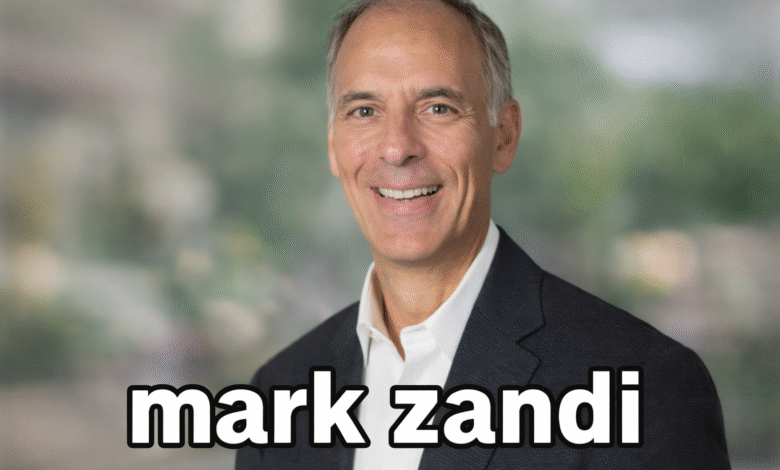
Mark Zandi stands as one of the most influential economists of the 21st century. As the Chief Economist of Moody’s Analytics, his research and insights have guided policymakers, business leaders, and governments in navigating economic challenges. Zandi’s deep understanding of economic trends, coupled with his ability to predict the course of the U.S. economy, has earned him recognition as a leading voice in economic forecasting. From the subprime mortgage crisis to the ongoing impact of technological advances, Zandi has consistently provided clarity and foresight.
Quick Bio
| Aspect | Details |
|---|---|
| Full Name | Mark M. Zandi |
| Date of Birth | 1959 |
| Birthplace | Atlanta, Georgia, USA |
| Nationality | American |
| Ethnicity | Iranian-American |
| Profession | Chief Economist, Moody’s Analytics |
| Education | B.S. in Economics, Ph.D. from University of Pennsylvania |
| Notable Works | Financial Shock, Paying the Price |
| Career Start | Regional Economist at Chase Econometrics (Early Career) |
| Family | Married with three children |
Early Life and Education
Mark Zandi’s journey into economics was shaped by his early years in Radnor, Pennsylvania, where he was raised. His father, Iraj Zandi, was an engineering professor from Iran, which instilled in Zandi an appreciation for academic rigor and analytical thinking. Zandi attended the Wharton School of the University of Pennsylvania, where he earned his B.S. in Economics. His passion for economics only grew stronger, leading him to pursue a Ph.D. in Economics from the same institution. This educational foundation laid the groundwork for his future contributions to the world of economic forecasting and policy.
His academic background provided him with the tools to understand complex economic dynamics, which later propelled him to the forefront of economic research. His ability to distill complex economic concepts into clear, actionable insights has made him a sought-after advisor and a trusted voice in U.S. economic policy.
Career Overview and Major Contributions
The Rise of Economy.com
Zandi’s career began in the early 1990s when he co-founded Economy.com, an economic research and consulting firm. The firm gained prominence for its comprehensive analyses of U.S. economic trends, particularly in areas like housing markets, fiscal policy, and financial stability. His work at Economy.com earned him respect within the economic community, with many regarding him as an expert in forecasting macroeconomic trends.
In 2005, Moody’s Corporation acquired Economy.com, and Zandi’s influence grew. He took on the role of Chief Economist at Moody’s Analytics, where he has remained ever since. Under his leadership, Moody’s Analytics has become a leading provider of economic forecasting, credit analysis, and risk management solutions.
Zandi’s career has been marked by his willingness to tackle tough issues. One of his most notable contributions came in the form of his early warnings about the risks of the 2008 financial crisis. He predicted the collapse of the subprime mortgage market, which played a significant role in the global financial meltdown. His ability to foresee the crisis before it unfolded cemented his reputation as a prescient and insightful economist.
Influencing U.S. Economic Policy
Zandi’s influence extends beyond the corporate world. As an economist at the helm of Moody’s Analytics, Zandi regularly testifies before U.S. Congress and advises policymakers on key economic issues. His ability to provide data-driven insights into fiscal and monetary policy has shaped discussions on topics like stimulus spending, government debt, and economic recovery.
His analysis has been crucial in assessing the effectiveness of fiscal stimulus packages and evaluating the long-term consequences of economic policies. Zandi’s work during the aftermath of the Great Recession and his support for government intervention to prevent a complete economic collapse have positioned him as a thought leader in the realm of economic policy.
Mark Zandi’s Influence on Global Economic Forecasting
Economic Forecasting Expertise
Mark Zandi’s ability to predict trends in the economy has earned him widespread recognition. His forecasts are based on rigorous data analysis, historical patterns, and a deep understanding of global economic forces. As Chief Economist of Moody’s Analytics, Zandi and his team have consistently provided accurate predictions on economic growth, interest rates, inflation, and unemployment. These forecasts are relied upon by governments, businesses, and investors to inform their decisions.
Zandi’s insights are particularly valuable during times of economic uncertainty. His ability to assess the implications of major events, such as financial crises, pandemics, and technological disruptions, has made his analyses indispensable for understanding economic resilience.
Navigating the Impact of Technology
In recent years, Zandi has focused on the intersection of technology and economics. As automation and artificial intelligence continue to reshape industries, Zandi’s expertise in forecasting has provided valuable insights into how these technological changes will impact employment, income distribution, and economic inequality. His work has highlighted the need for policymakers to address the potential risks posed by job displacement and automation, emphasizing the importance of retraining and reskilling the workforce.
Legacy and Influence
A Respected Economist
Mark Zandi’s legacy as an economist is built on his ability to predict major economic events and his commitment to providing clear, actionable economic insights. He is regarded as one of the foremost experts in economic forecasting, and his work has influenced not only U.S. policy but also the global economic landscape. Through his books, research, and media appearances, Zandi has become a trusted source of information for anyone looking to understand the intricacies of the economy.
His contributions have earned him numerous accolades, including regular appearances on major news outlets such as CNBC, NPR, and CNN. His ability to communicate complex economic concepts to a broad audience has made him an influential voice in the national and global conversation about economic policy.
Mark Zandi’s Impact on Future Economists
Zandi’s work has also had a lasting impact on future generations of economists. His dedication to data-driven analysis and his emphasis on the importance of accurate forecasting have influenced countless young economists. Zandi’s career serves as a model for aspiring economists who want to make a meaningful contribution to economic policy and forecasting.
Conclusion
Mark Zandi’s career has been marked by his ability to forecast economic trends, influence policy decisions, and provide valuable insights into the complexities of the global economy. From his early warnings about the 2008 financial crisis to his ongoing work at Moody’s Analytics, Zandi has established himself as a leader in economic research. His legacy is defined by his clear, actionable insights that have shaped economic policy and business strategy on a global scale.
FAQs
What is Mark Zandi known for?
Mark Zandi is best known for his work as the Chief Economist at Moody’s Analytics, where he provides economic forecasting and analysis. He is also recognized for his early warnings about the 2008 financial crisis.
What role has Mark Zandi played in U.S. economic policy?
Zandi has played a significant role in advising U.S. Congress on fiscal and monetary policies. His insights into government spending, debt management, and economic recovery have been instrumental in shaping U.S. economic policy.
Has Mark Zandi published any books?
Yes, Mark Zandi is the author of several books, including Financial Shock and Paying the Price, which analyze the causes and consequences of economic crises and recovery strategies.
How does Mark Zandi predict economic trends?
Zandi uses a combination of rigorous data analysis, historical patterns, and a deep understanding of economic dynamics to forecast trends in areas such as economic growth, inflation, unemployment, and interest rates.