marlene engelhorn: A Powerful Voice Challenging Inherited Wealth
 exploreclarion123@gmail.comJanuary 21, 2026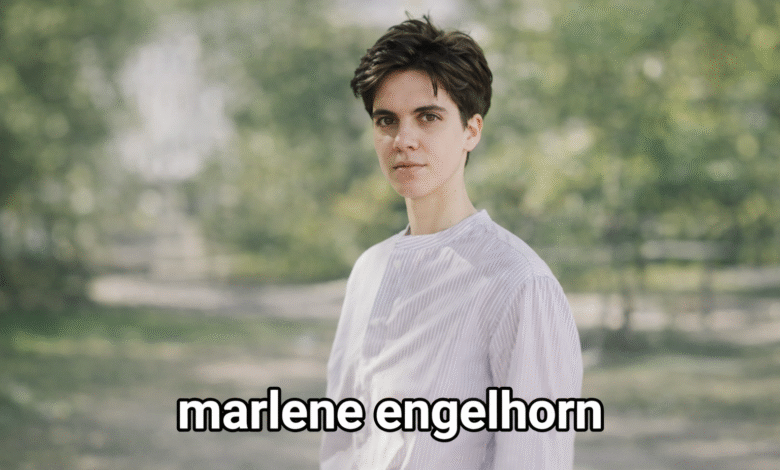
Table of Contents
ToggleIntroduction
Marlene Engelhorn has become one of the most talked-about figures in modern debates about wealth, privilege, and responsibility. Born into extraordinary fortune, she has taken a path that is both admired and criticized. Some view her as a courageous reformer willing to challenge her own advantages, while others question whether individual actions can truly fix systemic inequality. What is undeniable is that her voice has reshaped conversations around inherited wealth in Europe and beyond.
Her story is not one of building companies or accumulating assets, but of questioning why wealth exists in the first place and who should control it. By openly criticizing the system that benefited her, Marlene Engelhorn has placed herself at the center of economic, political, and moral debates. This article explores her life, education, activism, and long-term impact—focusing only on verified and publicly confirmed information.
Quick Bio
| Field | Details |
|---|---|
| Full Name | Marlene Engelhorn |
| Year of Birth | 1992 |
| Birthplace | Vienna, Austria |
| Nationality | Austrian & German |
| Education | University of Vienna (German Language & Literature) |
| Known For | Wealth-tax activism, redistribution advocacy |
| Major Initiative | Tax Me Now, Good Council for Redistribution |
| Book | Geld (2022) |
Early Life and Background
Marlene Engelhorn was born in Vienna in 1992 into a family whose wealth traces back to major industrial enterprises in Europe. Growing up in a privileged environment gave her early exposure to the realities of economic inequality, even if indirectly. Rather than shielding her from public awareness, this background later became central to her public identity.
Her early years were shaped by education in elite institutions, where she gained strong linguistic and cultural foundations. However, unlike many heirs to large fortunes, she did not move directly into business or finance. Instead, her upbringing gradually led her to question the fairness of inherited wealth and the systems that protect it.
Education and Intellectual Development
Engelhorn studied German language and literature at the University of Vienna. Her academic focus sharpened her critical thinking and communication skills, which later became essential tools in her activism. During her studies, she also worked in tutoring and educational roles, gaining practical experience outside elite financial circles.
This educational path influenced her ability to articulate complex social issues in accessible language. Rather than speaking as a detached heiress, she positioned herself as a citizen questioning democratic fairness. Her academic background reinforced her belief that wealth should be debated publicly, not preserved quietly.
The Start of Her Public Role
Marlene Engelhorn entered public discourse prominently in the early 2020s, before she formally received her inheritance. She openly stated that inheriting vast sums of money without merit was unjust and incompatible with democratic values. This stance immediately set her apart, attracting both praise and skepticism.
Her willingness to criticize her own privilege became a defining moment. Instead of framing herself as a benefactor, she argued that redistribution should be a systemic obligation enforced by law, not an act of personal generosity. This marked the beginning of her role as a public activist rather than a private individual.
Tax Me Now and Organized Activism
One of her most influential actions was co-founding Tax Me Now, an initiative advocating higher taxes on large fortunes and inheritances. The movement consists of wealthy individuals who publicly support tax reforms that would directly affect them.
Through this initiative, Engelhorn challenged a taboo topic: asking the rich to pay more. Supporters see this as moral leadership, while critics argue it risks oversimplifying complex economic systems. Nevertheless, the initiative succeeded in pushing wealth taxation into mainstream political debate, especially in German-speaking countries.
The Good Council for Redistribution
Perhaps her most groundbreaking project was the creation of the Good Council for Redistribution. Instead of personally deciding how to allocate her inherited wealth, Engelhorn invited randomly selected citizens to deliberate and decide collectively.
This approach shifted power away from the individual donor and toward democratic participation. The council ultimately allocated funds to dozens of organizations addressing social, environmental, and community needs. Supporters praised the transparency and innovation of this model, while critics questioned its scalability. Regardless, it became a landmark experiment in democratic redistribution.
Authorship and Public Thought
In 2022, Engelhorn published Geld, a book exploring money, power, and inequality. Rather than offering technical economic theory, the book reflects on moral responsibility and the social consequences of concentrated wealth.
Her writing reinforces her public message: wealth is not just a private matter but a political one. The book positioned her not only as an activist but also as a thinker contributing to broader philosophical discussions on justice and democracy.
Public Reception: Praise and Criticism
Marlene Engelhorn’s work has generated polarized reactions. Admirers view her as a rare example of someone willing to dismantle their own privilege for the public good. They argue that her actions expose flaws in tax systems and inspire broader reform.
Critics, however, question whether symbolic acts by individuals can replace institutional change. Some argue that her visibility stems from privilege itself, while others believe her ideas oversimplify economic realities. These opposing views highlight the tension between moral action and systemic reform—tension that defines her public image.
Conclusion
Marlene Engelhorn represents a powerful contradiction: a beneficiary of immense wealth who publicly challenges the system that created it. Her activism has not solved wealth inequality, but it has forced uncomfortable conversations into the open. By rejecting traditional philanthropy and embracing democratic redistribution, she has expanded the boundaries of what public accountability can look like.
Whether history remembers her as a catalyst for reform or a symbolic dissenter, her impact on the discourse around inherited wealth is undeniable. She has shown that privilege can be questioned from within, even if the answers remain contested.
Frequently Asked Questions (FAQ)
Who is Marlene Engelhorn?
She is an Austrian-German activist known for advocating wealth and inheritance taxes and for redistributing a large inherited fortune through democratic processes.
Why is Marlene Engelhorn famous?
She gained attention for publicly criticizing inherited wealth and creating innovative redistribution initiatives like the Good Council for Redistribution.
Did she inherit a large fortune?
Yes, she inherited a significant sum from her family and chose to redistribute most of it rather than keep it.
What is Tax Me Now?
It is an initiative co-founded by Engelhorn that campaigns for higher taxes on large fortunes and inheritances.
What is her long-term legacy?
Her legacy lies in challenging social norms around wealth, sparking debate on tax justice, and experimenting with democratic approaches to redistribution.