Phillip Lee: The Courageous Doctor-Politician Who Challenged Power and Redefined Political Integrity

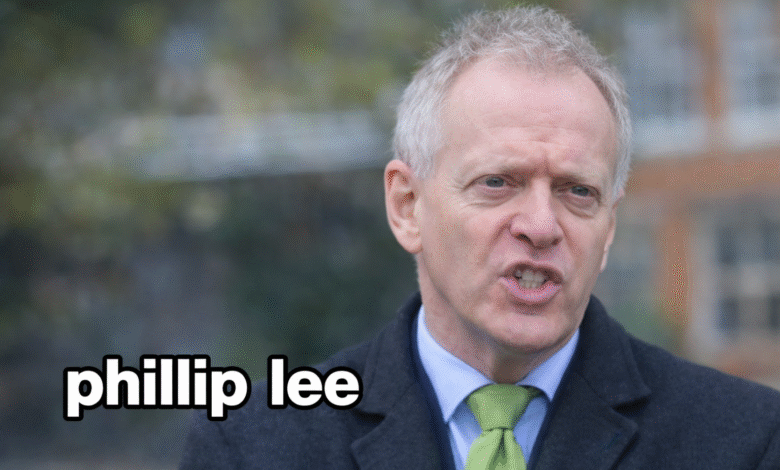
Phillip Lee is widely recognized as one of the most principled and outspoken figures in modern British politics. His career reflects both admirable courage and political controversy, making him a significant personality in the United Kingdom’s public life. As a qualified medical doctor who entered politics, Phillip Lee brought scientific thinking, analytical reasoning, and real-world healthcare experience into the political arena. His journey represents a rare combination of professional excellence and political determination.
At the same time, Phillip Lee’s career has not been free from challenges and criticism. His strong opposition to certain government policies, especially Brexit, led him to make bold decisions that reshaped his political path. While some praised him for his integrity and courage, others criticized his actions as politically disruptive. Regardless of opinions, Phillip Lee remains a symbol of conviction, independence, and dedication to public service.
Table of Contents
ToggleQuick Bio
| Field | Information |
|---|---|
| Full Name | Phillip James Lee |
| Date of Birth | 28 September 1970 |
| Age | 55 years (as of 2026) |
| Birthplace | Taplow, Buckinghamshire, England |
| Nationality | British |
| Profession | Physician, Politician |
| Education | King’s College London, University of Oxford, Imperial College London |
| Political Parties | Conservative Party (1992–2019), Liberal Democrats (2019) |
| Political Role | Member of Parliament for Bracknell (2010–2019) |
| Government Role | Parliamentary Under-Secretary of State for Justice |
| Medical Qualification | General Practitioner (GP) |
Early Life and Background
Phillip Lee was born on 28 September 1970 in Taplow, Buckinghamshire, England. Growing up in a stable and academically supportive environment, he developed a strong interest in science, medicine, and public affairs from an early age. His upbringing in Buckinghamshire played an important role in shaping his disciplined personality and intellectual curiosity. The environment encouraged critical thinking and academic excellence, which later became essential in both his medical and political careers.
During his early years, Phillip Lee showed exceptional academic ability and a strong commitment to learning. He attended Sir William Borlase’s Grammar School in Marlow, a respected institution known for producing high-achieving students. His school years helped build his analytical skills, leadership qualities, and sense of responsibility. These early influences laid the foundation for his future success in medicine and politics.
Education and Medical Training
Phillip Lee pursued higher education at some of the most prestigious institutions in the United Kingdom. He studied human biology and biological sciences at King’s College London, where he gained a deep understanding of human health and disease. His academic journey continued at Keble College, University of Oxford, where he further strengthened his scientific knowledge and intellectual abilities. His time at Oxford contributed significantly to his personal and professional development.
Later, he attended Imperial College London, where he completed his medical degree and qualified as a doctor in 1999. His medical training was rigorous and demanding, requiring discipline, dedication, and strong problem-solving skills. This period helped him develop a practical understanding of healthcare systems, patient care, and medical ethics. His education not only prepared him for a successful medical career but also shaped his perspective on public health and policy.
Medical Career and Professional Experience
Phillip Lee began his professional career as a medical doctor working in the National Health Service (NHS). He served in several hospitals, gaining valuable experience in clinical practice and patient care. His work exposed him to real healthcare challenges, including resource limitations, patient needs, and system inefficiencies. This firsthand experience gave him a unique understanding of healthcare beyond theory.
In 2004, he qualified as a General Practitioner (GP), which marked an important milestone in his medical career. As a GP, he worked closely with patients, providing diagnosis, treatment, and long-term healthcare support. His role required strong communication skills, empathy, and clinical expertise. His experience as a doctor later influenced his political views, especially on healthcare reform and public health policy.
Entry into Politics and Political Motivation
Phillip Lee joined the Conservative Party in 1992, showing early interest in political participation and national governance. His decision to enter politics was driven by a desire to contribute to society beyond medicine. He believed that political leadership could bring large-scale improvements in healthcare, infrastructure, and national development. His scientific background gave him a unique perspective on policy-making.
His involvement in politics gradually increased, and he became an active participant in political discussions and campaigns. His professional background as a doctor helped him gain credibility and public trust. His combination of intelligence, discipline, and public service commitment made him a strong candidate for political office. This preparation eventually led to his election as a Member of Parliament.
Member of Parliament Career and Political Achievements
Phillip Lee was elected as the Member of Parliament (MP) for Bracknell in 2010, marking the beginning of his parliamentary career. His election represented a major achievement and a significant transition from medicine to national politics. As an MP, he worked on important national issues, including healthcare, justice, science, and infrastructure. His medical background gave him a practical understanding of healthcare policy.
During his time in Parliament, he earned recognition for his independent thinking and willingness to challenge political decisions. He focused on improving public services, supporting scientific research, and promoting national development. His work demonstrated both leadership and intellectual strength. However, his willingness to oppose certain government policies also created political tension and controversy.
Government Role and Leadership Responsibilities
In 2016, Phillip Lee was appointed Parliamentary Under-Secretary of State for Justice, a significant government position. In this role, he worked on policies related to justice, victims’ rights, and offender health. His position allowed him to contribute directly to national policy development and government decision-making. This role reflected the government’s confidence in his abilities and leadership.
His experience as a doctor proved valuable in addressing healthcare issues within the justice system. He focused on improving support systems and healthcare services. His leadership demonstrated professionalism, dedication, and strong ethical values. However, political disagreements later led him to resign from this government position, highlighting his commitment to personal principles.
Brexit Opposition and Political Controversy
Phillip Lee became widely known for his strong opposition to Brexit, which became one of the most defining moments of his political career. He believed that Brexit would negatively impact the United Kingdom’s economic stability, scientific progress, and international relationships. His opposition was based on his analysis and personal convictions.
In 2019, he made a bold decision to leave the Conservative Party and join the Liberal Democrats. This move was both praised and criticized across the political spectrum. Supporters viewed him as courageous and principled, while critics saw his actions as politically disruptive. This decision significantly influenced his political career and public image.
Life After Parliament and Continuing Influence
After leaving Parliament in 2019, Phillip Lee returned to his medical profession and continued contributing to healthcare. His decision to return to medicine demonstrated his commitment to serving society through practical means. His medical work allowed him to remain connected to public service and community support.
Although he is no longer an MP, his political legacy continues to influence discussions about leadership, integrity, and political courage. His career serves as an example of how professionals from non-political backgrounds can contribute meaningfully to national governance. His influence remains relevant in discussions about healthcare and political ethics.
Conclusion
Phillip Lee’s journey from a medical doctor to a national political leader represents a powerful story of ambition, courage, and conviction. His career demonstrates how professional expertise can strengthen political leadership and policy-making. His dedication to healthcare, public service, and national development reflects his strong ethical values and sense of responsibility.
At the same time, his career also highlights the challenges and controversies that come with political independence. His willingness to stand by his beliefs, even when facing criticism, defines his legacy. Phillip Lee remains an important figure whose career continues to inspire discussions about leadership, integrity, and public service.
FAQ
Who is Phillip Lee?
Phillip Lee is a British physician and former Member of Parliament who served from 2010 to 2019. He is known for his medical career and political leadership.
When was Phillip Lee born?
He was born on 28 September 1970 in Taplow, Buckinghamshire, England.
What is Phillip Lee’s profession?
He is a qualified medical doctor and former politician who served as a General Practitioner and government minister.
Which political parties was Phillip Lee associated with?
He was a member of the Conservative Party until 2019 and later joined the Liberal Democrats.
What government role did Phillip Lee hold?
He served as Parliamentary Under-Secretary of State for Justice from 2016 to 2018.
Why is Phillip Lee considered an important political figure?
He is known for his independent thinking, healthcare expertise, and principled political decisions, especially regarding Brexit.