Stephen Richer: A Resilient Guardian of Democracy in America’s Most Watched Elections

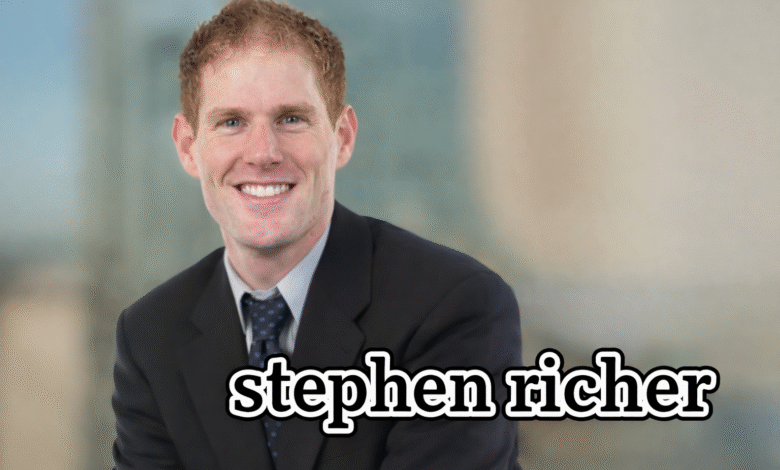
Table of Contents
ToggleIntroduction
Stephen Richer is a prominent American lawyer and former election official whose career sits at the intersection of law, public administration, and democratic integrity. Best known for serving as Recorder of Maricopa County, Arizona, he became a nationally recognized figure during one of the most polarized periods in modern U.S. politics. His leadership attracted both strong praise and sharp criticism, reflecting the intense environment surrounding election administration in the United States.
This biography presents a complete, verified, and fact-based account of Stephen Richer, focusing only on publicly confirmed information. It explores his background, education, professional journey, achievements, challenges, and lasting impact—without speculation or unverified personal claims.
Quick Bio
| Field | Details |
|---|---|
| Full Name | Stephen Richer |
| Nationality | American |
| Profession | Lawyer, Election Administrator |
| Known For | Recorder of Maricopa County (2021–2025) |
| Political Affiliation | Republican |
| Education | B.A. (Tulane University); M.A. & J.D. (University of Chicago) |
| Spouse | Lindsay Short |
| Notable Roles | County Recorder, Democracy Fellow, Consultant |
| Public Recognition | Multiple leadership and democracy awards |
Early Life and Background
Stephen Richer was born and raised in the United States and spent his formative years in the American West. His upbringing shaped an early interest in public affairs, law, and governance. While personal family details remain private, his educational and professional choices reflect a strong commitment to civic responsibility and institutional integrity.
From an early stage, Richer demonstrated a preference for structured thinking, debate, and analytical reasoning. These qualities later became central to his legal training and his approach to public office. His background helped prepare him for high-pressure roles that require precision, transparency, and accountability.
Education and Academic Foundation
Richer pursued higher education at respected academic institutions, building a strong interdisciplinary foundation. He earned a Bachelor of Arts from Tulane University, where he developed interests in law, policy, and public institutions. His undergraduate years laid the groundwork for a career centered on governance and legal systems.
He later attended the University of Chicago, earning both a Master’s degree and a Juris Doctor (J.D.). Known for its rigorous intellectual environment, the University of Chicago further refined his analytical skills, legal reasoning, and policy perspective. This academic background became a cornerstone of his later work in election administration.
Start of Career and Legal Work
Stephen Richer began his professional career as a transactional attorney, working on complex legal and business matters. His early legal practice involved advising organizations, interpreting regulatory frameworks, and managing high-stakes decisions that required careful judgment.
Alongside private legal work, he developed experience in public policy and governance-related roles. These early career experiences strengthened his understanding of institutional systems and the rule of law, preparing him for leadership positions that demanded both legal expertise and public accountability.
Entry into Public Service
Richer’s transition into public office reflected a deliberate choice to engage directly with democratic institutions. Running as a Republican, he sought election to a role that is often overlooked but critically important: county recorder. This position carries responsibility for voter registration, early voting, and election-related public records.
His campaign emphasized professionalism, administrative competence, and adherence to legal standards. In a competitive election, he was elected to serve as Recorder of Maricopa County, one of the largest and most influential election jurisdictions in the United States.
Recorder of Maricopa County: A Defining Chapter
Stephen Richer served as Recorder of Maricopa County from 2021 to 2025, overseeing election administration during an exceptionally contentious political era. His tenure coincided with heightened national scrutiny of election processes, placing his office at the center of public debate.
Positively, Richer was widely recognized for defending established election procedures and publicly affirming the accuracy of certified results. He emphasized evidence-based decision-making and transparency, which earned him respect from democracy advocates and legal experts. Negatively, his stance also drew intense criticism and political backlash, including opposition from factions within his own party.
National Attention and Public Discourse
Richer’s role extended beyond local administration as national attention focused on election integrity. He became a visible figure in public discussions about democracy, trust in institutions, and the responsibilities of election officials.
While supporters praised his willingness to uphold the law under pressure, critics argued that his public engagement intensified political tensions. This dual perception highlights the difficulty of neutral administration in a polarized environment and underscores the personal and professional risks faced by election officials.
Career After Public Office
After completing his term in 2025, Stephen Richer continued his work in democratic governance outside elected office. He took on roles in academic and policy institutions, contributing expertise on election administration and democratic resilience.
He also became involved in consulting and advisory work, focusing on governance, crisis response, and institutional integrity. These roles allow him to apply his experience while remaining engaged in national conversations about democracy and public trust.
Achievements and Recognition
Throughout his career, Richer received multiple honors recognizing leadership, legal service, and contributions to democratic governance. These awards reflect acknowledgment from journalism, legal, and civic organizations for his work during a challenging period.
Such recognition reinforces his reputation as a public servant who prioritized institutional responsibility, even when doing so carried professional and personal costs.
Legacy and Public Impact
Stephen Richer’s legacy is defined by principled decision-making in a polarized era. Positively, he is remembered as an election official who defended democratic processes with transparency and legal clarity. Negatively, his experience also illustrates the political and personal consequences of maintaining institutional integrity amid widespread distrust.
His career offers a case study in modern public service, highlighting both the value and vulnerability of democratic institutions when placed under extraordinary pressure.
Conclusion
Stephen Richer stands as a significant figure in contemporary American election administration. His journey from legal practice to one of the most scrutinized election offices in the country reflects commitment, resilience, and complexity. While opinions about his tenure differ, his impact on discussions of democracy, governance, and public trust is undeniable. His story underscores the challenges faced by those tasked with safeguarding democratic systems in turbulent times.
Frequently Asked Questions (FAQ)
Who is Stephen Richer?
Stephen Richer is an American lawyer and former Recorder of Maricopa County, Arizona, known for his role in election administration and democratic governance.
What is Stephen Richer best known for?
He is best known for overseeing election processes in Maricopa County during a period of intense national scrutiny and political controversy.
What is his educational background?
He holds a Bachelor’s degree from Tulane University and a Master’s degree plus Juris Doctor from the University of Chicago.
Is Stephen Richer still involved in public life?
Yes, after leaving office, he continues to work in academic, advisory, and consulting roles related to democracy and governance.
Why is Stephen Richer considered controversial?
He received both praise and criticism for publicly defending certified election results, which placed him at the center of political debate.