wanda vázquez garced: A Powerful Political Journey Through Crisis, Leadership, and Controversy

Introduction
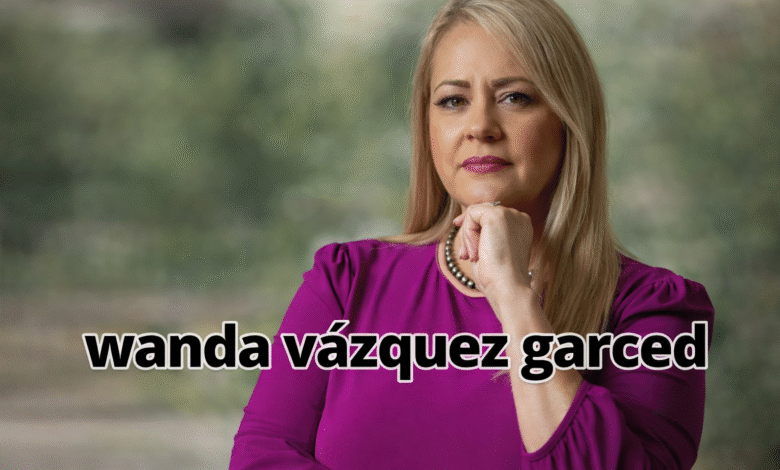
Wanda Vázquez Garced is one of the most consequential political figures in modern Puerto Rican history. Her rise to power did not follow a traditional electoral landslide; instead, it emerged from an unprecedented constitutional crisis that reshaped the island’s leadership. Her tenure reflects both strength and controversy, resilience and criticism, making her a complex public figure whose story continues to influence political discourse.
Known for her long career in public service and law, Wanda Vázquez Garced occupied the highest office in Puerto Rico during a time of deep instability. While her leadership symbolized institutional continuity and female representation, it was also marked by political unrest and later legal consequences. This biography presents a complete, verified, and balanced account of her life and career—without speculation or unconfirmed claims.
Quick Bio
| Field | Details |
|---|---|
| Full Name | Wanda Emilia Vázquez Garced |
| Date of Birth | July 9, 1960 |
| Age (2025) | 65 years |
| Birthplace | Santurce, San Juan, Puerto Rico |
| Nationality | Puerto Rican (U.S. citizen) |
| Profession | Attorney, Politician |
| Political Party | New Progressive Party (PNP) |
| Known For | Governor of Puerto Rico (2019–2021) |
| Spouse | Jorge Díaz Reverón |
| Children | Two daughters |
Early Life and Background
Wanda Vázquez Garced was born in Santurce, a district of San Juan, Puerto Rico, and later raised in Guaynabo. She grew up in a working-class household where discipline, responsibility, and perseverance were core values. Her parents were factory workers, and her father also worked as a security guard, instilling in her a strong respect for law, order, and public service.
From an early age, she showed an interest in justice and legal systems. This interest gradually evolved into a clear career path, shaped by education, discipline, and long-term dedication to public institutions. Her upbringing grounded her in the realities faced by ordinary Puerto Rican families, a perspective that later influenced her professional choices.
Education and Legal Foundation
Wanda Vázquez Garced completed her undergraduate studies at the University of Puerto Rico, Río Piedras campus. She later earned her Juris Doctor degree from the Interamerican University of Puerto Rico School of Law. Her legal education provided the foundation for a career deeply rooted in public service rather than private practice.
Her academic journey prepared her for prosecutorial work, policy enforcement, and executive decision-making. Unlike many political figures who begin their careers in party politics, she entered public life through the justice system, shaping her image as a law-and-order professional.
Start of Career in Public Service
Her professional career began in the 1980s at the Puerto Rico Department of Housing, where she gained early experience in public administration. Shortly afterward, she joined the Puerto Rico Department of Justice as a career prosecutor. Over more than two decades, she handled a wide range of criminal cases, earning recognition for her persistence and procedural knowledge.
This phase of her career defined her identity as a government lawyer rather than a political strategist. It also positioned her as a figure of authority within legal institutions, eventually opening doors to higher administrative roles.
Leadership in Women’s Rights and Justice
In 2010, Wanda Vázquez Garced was appointed to lead Puerto Rico’s Office for Women’s Rights. This role placed her at the center of policy discussions related to gender-based violence and legal protections for women. Her tenure attracted both praise for institutional reforms and criticism from advocacy groups, reflecting the difficult balance between policy enforcement and social expectations.
Later, in 2017, she was appointed Secretary of Justice of Puerto Rico. In this role, she became the island’s chief legal officer, overseeing prosecutions and advising the executive branch. Her leadership style was often described as firm and procedural, emphasizing legal frameworks over political rhetoric.
Rise to the Governorship
Wanda Vázquez Garced became Governor of Puerto Rico on August 7, 2019, following the resignation of Governor Ricardo Rosselló amid mass protests. Her ascent occurred after a brief constitutional dispute that invalidated another succession attempt, placing her next in line under Puerto Rico’s constitution.
Her appointment was historic and controversial. Positively, she became the second woman to serve as governor. Negatively, she assumed office without a direct electoral mandate, which immediately affected public trust and legitimacy debates.
Tenure as Governor: Challenges and Decisions
Serving from 2019 to 2021, her governorship unfolded during extreme political tension. She faced the ongoing recovery from natural disasters, fiscal instability, and the early stages of the COVID-19 pandemic. Her administration focused on continuity, emergency management, and administrative control rather than ambitious reforms.
While some viewed her leadership as stabilizing during uncertainty, others criticized it as lacking vision and public engagement. This dual perception continues to define assessments of her time in office.
2020 Election and Political Decline
In 2020, Wanda Vázquez Garced sought the New Progressive Party’s nomination for governor but lost the primary election. This defeat effectively ended her executive political career and marked a clear shift in public sentiment.
The loss highlighted the gap between institutional authority and popular support, reinforcing the challenges she faced throughout her governorship.
Legal Proceedings and Latest Developments
In 2022, federal authorities charged her in connection with campaign finance violations related to the 2020 election. In 2025, she pleaded guilty to a federal campaign finance offense, becoming the first former governor of Puerto Rico to do so. This development significantly reshaped her public legacy.
The case underscored the importance of transparency and accountability in public office, serving as a cautionary chapter in Puerto Rico’s political history.
Legacy and Historical Significance
Wanda Vázquez Garced’s legacy is deeply complex. On the positive side, she broke gender barriers, upheld institutional continuity, and demonstrated the rise of a career public servant to the highest office. On the negative side, her tenure is inseparable from political instability and legal accountability.
Her story reflects both the strengths and vulnerabilities of governance during crisis. She remains a powerful example of how authority can be achieved through institutions—and how trust must be maintained through integrity.
Conclusion
Wanda Vázquez Garced’s life and career illustrate a rare and instructive political journey. From prosecutor to governor, her path was defined by discipline, authority, and consequence. While her leadership brought historic milestones, it also revealed the enduring costs of political controversy.
Her biography stands as a reminder that public power carries both opportunity and responsibility, and that legacy is shaped as much by decisions after office as those made within it.
Frequently Asked Questions (FAQ)
Who is Wanda Vázquez Garced?
She is a Puerto Rican attorney and politician who served as Governor of Puerto Rico from 2019 to 2021.
Why did Wanda Vázquez Garced become governor without an election?
She assumed office following the resignation of the sitting governor and a constitutional succession process.
What is she most known for?
She is known for being Puerto Rico’s second female governor and for leading during a period of political crisis.
Did she run in the 2020 election?
Yes, she ran in the party primary but did not win the nomination.
What is her historical significance?
Her tenure represents both a milestone in female political leadership and a cautionary example of governance under scrutiny.