Introduction
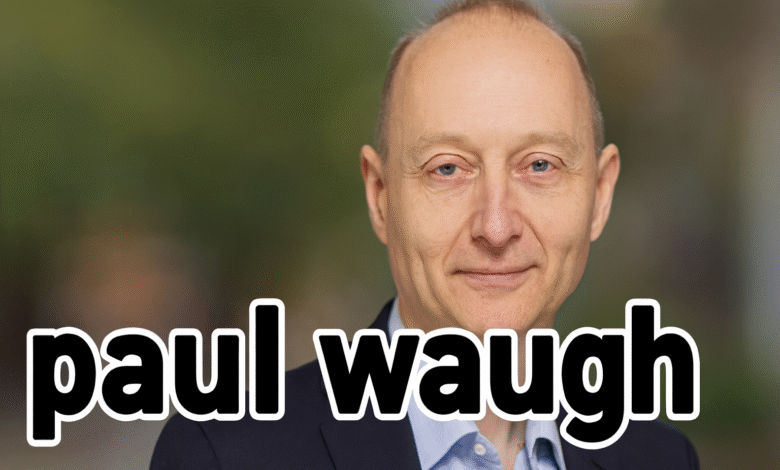
Paul Waugh is widely recognised as one of the most influential political journalists-turned-politicians in modern British public life. Known for his sharp analytical mind, deep understanding of Westminster, and genuine connection to his working-class roots, Paul Waugh has built a reputation defined by integrity, insight, and dedication to public service. His journey — from growing up in a council estate in Rochdale to becoming the Member of Parliament for the same area — reflects both resilience and the challenges of British social mobility.
In the public eye, Paul Waugh is often described as both a powerful communicator and a determined reform-minded representative. Admirers highlight his commitment to accountability, fairness, and community uplift, while critics note his rapid shift from journalism to politics as a bold and sometimes controversial move. This balanced mix of positive and negative perceptions makes his biography even more compelling.
Quick Bio (Verified Information Only)
| Category | Details |
|---|---|
| Full Name | Paul Waugh |
| Birthplace | Wardle, Lancashire, England |
| Nationality | British |
| Early Life | Raised in Spotland, Rochdale (working-class council estate) |
| Education | Studied Philosophy & Physiology (Oxford); Journalism (Cardiff) |
| Occupation | Former Political Journalist; MP for Rochdale |
| Political Party | Labour & Co-operative Party |
| Constituency | Rochdale (elected 2024) |
| Known For | Westminster journalism, “WaughZone”, community-focused politics |
paul waugh Early Life and Background
Paul Waugh’s early childhood was shaped by the working-class environment of Spotland, Rochdale, where he lived on a council estate across from the Rochdale A.F.C. football ground. This upbringing deeply influenced his understanding of everyday challenges faced by ordinary British families. He has often spoken about how his community shaped his identity and his determination to represent local voices.
His early years were grounded in modesty, humility, and public spirit. Growing up in Northern England helped him develop a strong sense of fairness, justice, and accountability — traits that would later define both his journalistic style and political stance.
Education and Academic Journey
Paul Waugh attended Oulder Hill Community School in Rochdale, where he developed a strong academic foundation. His intellectual curiosity later took him to the University of Oxford, where he studied philosophy and physiology — a combination that sharpened both his critical thinking and analytical skills.
With a growing interest in communication and public affairs, he pursued further education in journalism at Cardiff University. This move marked a major turning point, as it laid the groundwork for his distinguished career in political reporting.
paul waugh Start of Professional Career
Paul Waugh’s professional journey began in the world of journalism, where he quickly gained recognition for his sharp political analysis and fast-paced reporting. His early roles provided him with firsthand exposure to British politics, and his credibility grew as he navigated the newsroom environment with both discipline and passion.
Over the years, he built a reputation for accuracy, fairness, and insight. These qualities set him apart and eventually opened opportunities for senior editorial roles at some of the largest news organisations in the UK.
Major Journalism Roles and Achievements
Deputy Political Editor and Editorial Contributor
Paul Waugh served as Deputy Political Editor at The Independent and later at the London Evening Standard. These positions allowed him to develop a deeper understanding of Westminster, interviewing top politicians, uncovering policy issues, and analysing the constantly shifting dynamics of national leadership.
His talent for simplifying complex political debates made him a respected voice among readers. He became known for providing context, clarity, and accountability at a time when political transparency was increasingly demanded by the public.
Editor of PoliticsHome
Waugh later became Editor of PoliticsHome, one of the UK’s most influential political news platforms. Under his leadership, the website grew in relevance and reach, serving politicians, journalists, and readers interested in political developments.
This role solidified his standing as a top-tier political journalist, paving the way for his eventual leadership at HuffPost UK’s political division.
Executive Editor, Politics — HuffPost UK
At HuffPost UK, he created the highly popular “WaughZone” newsletter — a highly regarded daily briefing read by MPs, policymakers, and political professionals. His concise yet impactful style made the publication a staple for Westminster insiders.
His analysis consistently highlighted key political issues and held leaders accountable. Many considered him one of the most trusted political commentators of his time.
paul waugh Entry into Politics
After more than two decades as a journalist, Paul Waugh made the bold decision to transition into active politics. In 2024, he stood as the Labour & Co-op candidate for Rochdale. His campaign emphasised public service, local investment, NHS support, and social justice — themes rooted in his personal and professional experiences.
He won the seat in the 2024 UK general election, becoming the Member of Parliament for the area where he grew up. Supporters praised his authenticity and local connection, while detractors questioned whether journalists should move directly into politics. Yet this transition demonstrated his commitment to creating change from within government.
Parliamentary Career and Public Service
Since entering Parliament, Paul Waugh has been actively involved in key national and constituency matters. His work reflects his long-held values of accountability, transparency, and community welfare.
He currently serves on the Culture, Media and Sport Select Committee, where his extensive background in journalism and media gives him a strong foundation for scrutiny and policymaking. His contributions focus on protecting public services, improving housing standards, and addressing local concerns in Rochdale.
paul waugh Impact, Influence, and Public Image
Paul Waugh’s influence can be seen in both journalism and politics. In journalism, he shaped political storytelling, made daily briefings more accessible, and strengthened fact-based reporting. His newsletter, “WaughZone,” remains one of his most impactful contributions to political communication.
In politics, his presence represents a bridge between the media and government — offering insights into how communication, accountability, and governance intersect. Supporters appreciate his authenticity and commitment, while critics debate his quick shift from observer to decision-maker.
Conclusion
Paul Waugh’s life story is a compelling example of how passion, persistence, and public service can shape a meaningful career. From his humble beginnings in Rochdale to becoming one of the UK’s most respected political journalists and ultimately an elected MP, he embodies the journey of someone who worked tirelessly to represent both truth and community.
His impact continues to grow as he plays a role in shaping national debates, strengthening public accountability, and advocating for the people of Rochdale. Whether in the newsroom or in Parliament, Paul Waugh remains a significant figure whose influence is felt across both political communication and public leadership.
FAQ
Who is Paul Waugh?
Paul Waugh is a British political journalist and the Member of Parliament for Rochdale, elected in 2024.
What is Paul Waugh best known for?
He is best known for his political journalism, particularly his “WaughZone” briefing at HuffPost UK.
What political party does he represent?
He is a Labour and Co-operative Party MP.
Where was he born?
He was born in Wardle, Lancashire, and raised in Spotland, Rochdale.
Is Paul Waugh married?
He has publicly stated that his wife works in the National Health Service (NHS).
What roles has he held in journalism?
He worked at The Independent, London Evening Standard, PoliticsHome, the i newspaper, HuffPost UK, and BBC radio.