Karin Smyth: A Powerful Political Journey of Service, Reform, and Responsibility

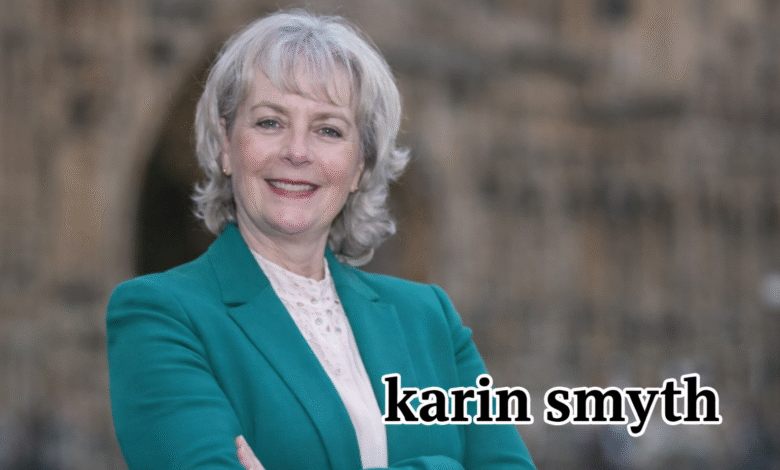
Table of Contents
ToggleIntroduction
Karin Smyth is a senior British politician whose career reflects commitment, resilience, and deep engagement with public service. Known for her work in health policy and parliamentary accountability, she has steadily built a reputation as a serious policymaker rather than a media-driven figure. While supporters praise her practical approach to reform, critics argue that the scale of challenges in the National Health Service (NHS) often outpaces ministerial influence. Both perspectives form part of the reality of modern British politics.
Serving as a Member of Parliament since 2015 and later rising to a ministerial role, Karin Smyth represents a blend of professional experience and political responsibility. Her background in NHS management has shaped her priorities, but it has also placed her under scrutiny during a period of intense pressure on public healthcare. This article provides a complete, verified, and balanced biography focused only on confirmed information.
Quick Bio: Karin Smyth
| Attribute | Details |
|---|---|
| Full Name | Karin Marguerite Smyth |
| Date of Birth | 8 September 1964 |
| Age | 61 (as of 2025) |
| Birthplace | London, England |
| Nationality | British |
| Political Party | Labour Party |
| Education | BA (Economics & Social Studies), MBA |
| Profession | Politician, former NHS manager |
| Current Role | Minister of State for Secondary Care |
| MP for | Bristol South |
| Family | Married, three children |
Early Life and Background
Karin Smyth was born in London to parents who had emigrated from Ireland in the 1950s. Growing up in a working-class household, she experienced the realities of economic insecurity, public housing, and reliance on state services. These early experiences shaped her political outlook and later informed her focus on equality, access to healthcare, and public accountability.
Her upbringing did not place her among political elites, and this distance from privilege has often been highlighted as a strength. However, critics note that personal background alone does not guarantee policy success, especially in complex national systems like healthcare. Smyth’s early life nevertheless provided a grounding that continues to influence her public work.
Education and Academic Foundation
Karin Smyth completed her early education in London before attending the University of East Anglia, where she earned a Bachelor’s degree in Economics and Social Studies. During this time, she was elected President of the Students’ Union, an early indication of her leadership abilities and interest in representation.
She later completed a Master of Business Administration (MBA) at the University of Bath, strengthening her expertise in management and organizational leadership. This combination of economics, social policy, and business administration would later become central to her approach to public sector reform, particularly within the NHS.
Start of Career in Public Service
Before entering Parliament, Karin Smyth built a substantial career in public service. In 1997, she worked as an office manager for a Labour Member of Parliament, gaining firsthand experience of parliamentary operations and constituency work. This role provided insight into legislative processes and the everyday concerns of voters.
More significantly, she held senior management roles within the NHS, including work with the Bristol Clinical Commissioning Group and service as a non-executive director of a Primary Care Trust. These roles gave her operational knowledge of healthcare delivery, budgets, and workforce challenges. Supporters view this as a major strength, while critics argue that managerial experience does not always translate smoothly into political reform.
Entry into Politics and Parliamentary Career
Karin Smyth was elected as the Labour Member of Parliament for Bristol South in the 2015 general election. Representing a constituency with social and economic diversity, she focused on local issues such as healthcare access, employment, transport, and education. Her re-election in subsequent elections demonstrated consistent local support.
In Parliament, Smyth served on influential committees, including the Public Accounts Committee, where she examined government spending and accountability. She also held several shadow ministerial roles, contributing to Labour’s policy development during years in opposition. While not always a high-profile media figure, her work was often described as detailed and policy-focused.
Ministerial Role and National Responsibilities
Following Labour’s return to government, Karin Smyth was appointed Minister of State for Secondary Care in the Department of Health and Social Care. In this role, she became responsible for areas such as hospital services, workforce planning, and urgent and emergency care.
This position placed her at the center of one of the UK’s most complex policy areas. Supporters credit her with bringing practical NHS experience into government decision-making. At the same time, critics argue that systemic issues such as waiting times and staffing shortages require structural solutions beyond any single minister’s control. Her role reflects both the opportunity and the limits of political leadership.
Policy Focus and Public Reputation
Karin Smyth is widely associated with health policy, particularly NHS sustainability and access to care. She has also been active in parliamentary groups focused on end-of-life issues and public accountability. Her style is often described as serious, measured, and less performative than some of her contemporaries.
However, this low-profile approach can be viewed negatively in an era where public communication is critical. While some voters appreciate substance over spectacle, others expect more visible leadership. This balance between quiet policy work and public engagement continues to shape her reputation.
Legacy and Ongoing Impact
Karin Smyth’s political legacy is still developing. She represents a model of politics grounded in professional expertise and constituency service rather than celebrity. Her rise from NHS management to ministerial office highlights the value of sector-specific experience in governance.
At the same time, her career illustrates the challenges faced by policymakers operating within constrained systems. Success in public office is often judged not only by intent or experience but by outcomes, many of which depend on broader economic and political forces. Her long-term impact will likely be assessed through reforms achieved and public trust maintained.
Conclusion
Karin Smyth’s career reflects dedication to public service, informed by real-world experience in healthcare and management. She embodies both the strengths and limitations of modern political leadership: expertise and commitment on one hand, and structural constraints on the other. As a minister and long-serving MP, she remains a significant figure in UK health policy, navigating praise and criticism in equal measure.
Frequently Asked Questions (FAQ)
Who is Karin Smyth?
Karin Smyth is a British Labour Party politician, Member of Parliament for Bristol South since 2015, and Minister of State for Secondary Care.
What is Karin Smyth known for?
She is best known for her work on NHS policy, public accountability, and her background in healthcare management.
What did Karin Smyth do before politics?
Before entering Parliament, she worked in NHS management and as an office manager for a Labour MP.
Is Karin Smyth married?
Yes, she is married and has three children.
What is Karin Smyth’s current role?
She currently serves as Minister of State for Secondary Care in the UK government.